301.620.8604 866.233.2297

Saving Energy & Lowering Your Heating Bills

January 25th, 2011

Nothing can help you save a dollar or two in this sort of economy like lowering household bills (such as the heat!) Heating your home is a necessary expense that you won’t be able to get rid of, so lowering that cost as much as possible is a smart solution.

What you can do:

  • Home Heat Pumps Instead of Traditional Furnaces
    • Heat Pumps greatly improve upon the efficiency of the traditional HVAC system.
  • Serviced by a Licensed Professional Every Season
    • Make sure your air filters are being changed. Clean or replace the filter regularly (every month or so depending on the frequency of use of the unit) in your heating/cooling unit. When the filter is dirty, the energy efficiency of the unit is reduced.
  • Controlling the Humidity Level
    • Getting a good humidifier can make your house feel warmer or cooler (as needed) by controlling that humidity level.
  • Capitalize on those Tax Credits!
    • There are savings to be had with credits for upgrading or replacing older, less efficient appliances or by using heat pumps (see above!)
  • Insulating Your Entire Home
    • Unless your home was built as an energy-efficient home, adding insulation will probably reduce your utility bills. Even a small amount of insulation–if properly installed–can reduce energy costs dramatically.

Performing simple tasks such as these may help you save on heating costs during these cold winter months. It’s always a good idea to check with a licensed professional, too, if you have any questions!

Practical upgrades pay off in kitchens and bathrooms

November 2nd, 2010

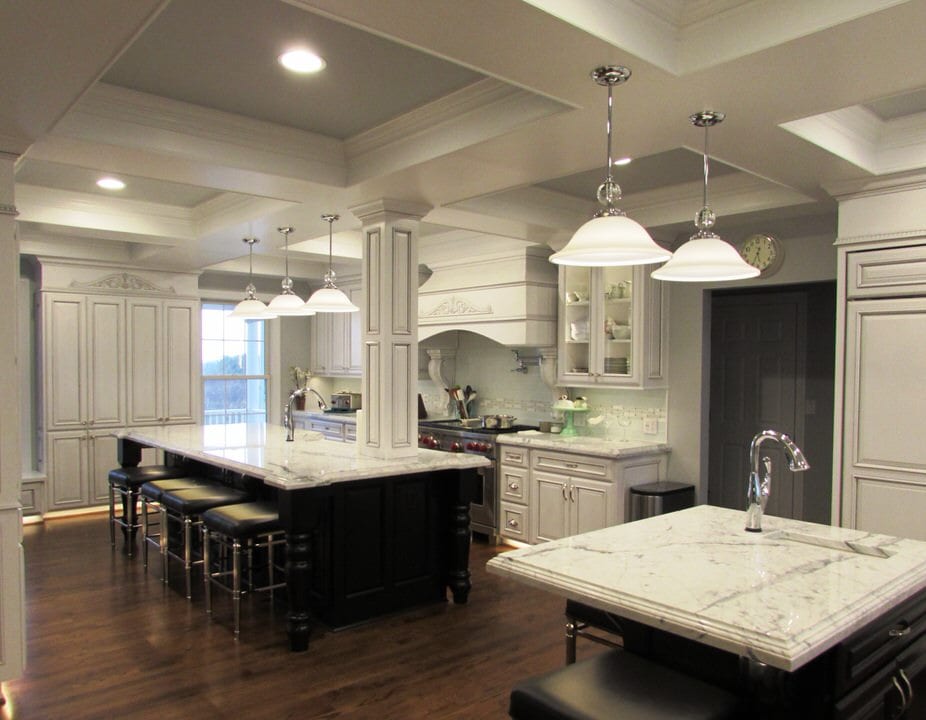
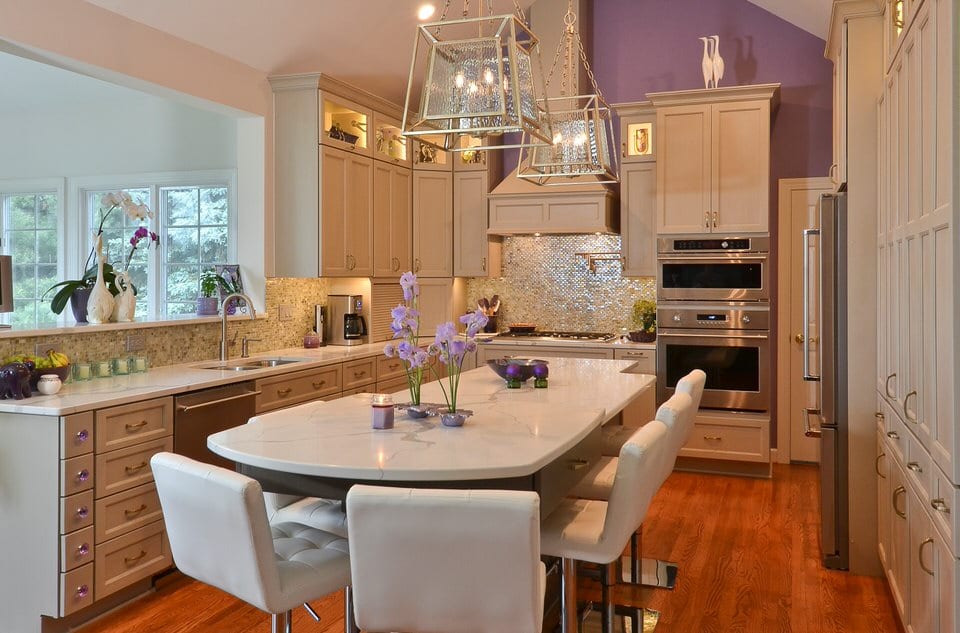
Practical pays off when it comes to kitchen and bath renovations. Gone are the days when virtually every kitchen or bathroom remodel involved top-of-the-line luxury upgrades and a budget big enough to fund an Ivy League education. Today’s homeowners want more value for their remodeling dollars, and that means turning to improvements that make both functional and fiscal sense.

Sinks play a pivotal role in the usability and desirability of both bathrooms and kitchens. In baths, replace dated, single-basin vanities with dual-sink models, which are in high demand by homebuyers. For kitchen sinks, which are on display in your home 24/7, opt for a blend of practicality and beauty. Today’s large selection of fabricated stainless steel sinks blend form and functionality. The sinks can be installed as undermount or self-rim, so they work with virtually any decor.

A great shower isn’t just a luxury, it’s a practical concern as well. Americans rely on their showers for more than just cleanliness – a shower is also a spot to relax and decompress. Shower surrounds have made it particularly easy to upgrade an existing shower. Some manufacturers have introduced seated showers, with a seat that is movable and removable. The seating area allows you to relax in a seated position, leaning against the shower wall.

Winter-proof your home this fall for year-round benefits

November 1st, 2010

(ARA) – After a summer of record-breaking temperatures across the country, you may be wondering if the impending winter weather will be just as extreme. While harsh weather puts a strain on wallets with increased energy bills, it can also be damaging to the home. Before the ice and snow hit, consider winterizing your home to help increase efficiency and minimize maintenance.

Adding gutter protection is one small improvement that can make a big difference on a home during the fall and winter months. Gutter protection helps keep debris such as leaves, twigs and pine needles from clogging gutters, allowing water to flow freely and reducing the possibilities of ice damming. If melting ice is unable to drain, it could seep into the walls and ceilings of your home. Certain gutter guards also add strength to the gutter and create a strong resistance to high winds, heavy amounts of snow, ice, ladder damage and pest invasion. For an effective, low maintenance solution, ask your contractor for gutter protection with solid aluminum construction, such as Leaf Relief by Ply Gem

Cut home heating costs this winter

September 28th, 2010

Cut home heating costs this winter

 Imagine cutting your heating bills, while boosting your home’s comfort.Sound too good to be true? Not for the thousands of homeowners who are using radiant floor heating.

 Radiant technology, dating back to the ancient Romans, uses warm water to heat the floor, instead of a furnace to heat the air. Modern radiant systems pump warm water through an in-floor network of PEX tubing (crosslinked polyethylene).

 Many families actually feel warmer at a lower thermostat setting with radiant floor heating. The lower thermostat setting means using less energy and saving more money.

 ”Because radiant heating warms people and objects directly – as opposed to the surrounding air – residents are more comfortable, while often using less energy,” explains Mark Hudoba, senior product manager, Residential Heating and Cooling, at Uponor North America, a manufacturer of PEX-based radiant heating systems. “Radiant systems tend to yield consistent temperatures throughout the space. In homes heated with forced air, the temperatures can vary by more than 15 degrees between floor and ceiling.”

 Other benefits include:

* There is no circulation of dust, mold, bacteria, viruses and pet dander throughout the home, because a radiant system needs no fans.

 * No fans and blowers also means no noise.

Create ‘curb appeal’ with easy home projects

September 22nd, 2010

Create ‘curb appeal’ with easy home projects

Whether you’re selling your home and want the best price, or you just want to be the envy of the neighborhood, creating “curb appeal” can be very rewarding.

 After lawns, driveways often make up the largest area of the front yard, and can really affect opinions of your home. “Driveways and sidewalks are the entryways to the home. If they’re in great shape, you’ve got a strong first impression. If not — you’ve said a lot about the quality of the home,” says Gordon Blickle of Gardner-Gibson, a manufacturer of driveway, brick and patio sealers.

 Fix driveway dings:

Renew the look of an old, worn blacktop driveway and fill small cracks with fast-drying Black Jack Ultra-Maxx 1000, a flexible, long-lasting filler and sealer with a 10-year guarantee.

 Light the night:

Installing low-voltage or solar landscape lighting can create a softly lit path to border the driveway.

 Clean up that sidewalk:

Clean the walk with Driveway Kleen, a garden-safe spray solution that attaches to a garden hose.

 Stop and smell the roses:

Create a “buffer” strip with a decorative rock garden or plant flowers along the path to create an inviting drive up to the home.

 Get an edge:

Edge the driveway with pavers in colors complementary to the home and pavement.

Greening your home: What does it really take?

September 16th, 2010

In today’s environmentally conscious times, it seems we’re surrounded by the need to shop, act and live “green.” Some of our choices are easy and small, while others can be big and costly.

 According to Ed Detgen at Danze, Inc., some of the most important green choices we can make involve decisions to live more green within our own home. But what does living green really mean?

 Reducing water usage is a great way to incorporate green practices in your daily routing. Detgen offers up these tips on how to immediately conserve water (and save money) in your home:

 * Replace older toilets (1992 or earlier) with newer, high-efficiency models. They operate at 1.28 gallons per flush and could save 11 gallons of water per toilet per day.

 * Be sure to turn off the tap when brushing your teeth – it could save nearly 3,000 gallons of water per year.

 * According to the Environmental Protection Agency Water Sense program, if every household in the United States installed WaterSense-labeled bathroom sink faucets, we could save more than $350 million in water utility bills and more than 60 billion gallons of water annually, plus $600 million in energy costs for heating the water.

The Inconvenient Truth about Remodeling

August 19th, 2010

Major Remodels, New Homes and Home Additions  — Concerns, Costs, Cautions and Issues

Whether you are planning to do a major remodel, a major home addition or build a custom home, there are a multitude of things to keep in mind and certain steps you can take to help you avoid pitfalls and set-backs. Simply put, unless they have undertaken such a task previously, most people don’t have a firm grasp on what they are getting into when they start a home addition, major remodel or new home project.

There are many concerns you will (or should) have including: relationship (with contractor), cost, timing, scheduling, inconvenience, displacement, the perceived vs. the actual, selections, and much more.  Let’s look at the major issues.

The relationship holds the top spot on the list for a very good reason. Whatever your project is, the relationship with your contractor is without a doubt the most important factor in the success equation. Think about it … you are essentially inviting this person and his/her crew into your home to “live with you” for 8 hours a day for the next 2 … 3 … 4 or more months.  You need to be comfortable with this company and have common expectations, values and respect.  If you select a contractor based on the low price alone while ignoring this critical evaluation, chances are it will be at the cost of the relationship and a terrible remodeling experience is nearly certain. In addition to “living together”, you must also work together to a common end.  Select an intelligent, caring and reputable firm with project cost being a secondary concern.  It will be cheaper for you, the homeowner, in the end.

By every measure, cost is a huge factor and needs to be openly addressed, discussed and clearly understood by all parties.  Contractors must be fair, but not charitable. They need to make a living and need to make enough money to “be able to afford to give the client a good job”.  When you beat your contractor down in price to a level that is below the comfort (profit) level, the only outcome you should ever expect is to pay the price in quality.  Often times the homeowner thinks he is comparing apples to apples, when in fact he has taken the low price (which is the price he likes best) and tries to measure all the other offers against it.  The common reality is that the lowest cost is frequently representative of the most corners cut, cheaper materials, uninsured firms, two-man-firms or “Pick-up-Pete’s” as they are commonly referred to,  unrealistic allowances, unrealistic schedules, undesirable personal habits, or unqualified (potentially illegal) labor and questionable craftsmanship.  It’s very simple … we all buy products and materials from the same place at the same price.  The only difference can be the quality of the craftsmanship and labor.  Trained craftsmen cost more than illegal or unqualified workers.  The difference will be VERY evident in the finished product.

Guarantee #1 … It will take longer than you think it should and the time to complete will get longer if the homeowner makes numerous changes along the way.

Scheduling can make all the difference between what is deemed a successful job and a terrible experience.  Again, be realistic.  If one firm is telling you your new home will take 10 months to complete and another is telling you it will take five months to complete.  Assuming prices are competitive and you have done your homework and know that the contractors are both qualified and reputable … then one of them isn’t being completely honest!  Period!  You probably mentioned during negotiations that “time is an important factor.”  Accordingly, one contractor is playing that trump card … knowing full well that when the job is only 50% complete 5 months from now that you will not throw him off the job, but will grudgingly let him finish 5 months later than promised.  Do not allow yourself to be fooled. Equal offers can not have that kind of disparity.  Use common sense and everyone will be happier in the end.


Guarantee #2 … You will be tired of the whole process long before it is complete.

Historically, when the homeowner gets “tired” (e.g. impatient with the process) they tend to look for fault in the contractor … even though the job is right on-schedule.  I can not stress enough the fact that you must be prepared to be inconvenienced. It is going to happen from the beginning and you need to be prepared for it.  Three months to complete a major addition might not sound like a long time, however, 3 weeks into it, you will be counting days until it is complete and the relationship will start to erode unless you maintain a realistic expectation.  The fact that you are tired of the inconvenience in week 4 of 12 does not mean the contractor is not doing his job.

Guarantee #3 … It will cost more than you think it should and the cost will go up with numerous changes.

Communicate your vision with your Contractor early in the process. Think things through fully and try to avoid or minimize changes once the job starts. If the project has any size at all, there will probably be a few unavoidable changes along the way.  Contrary to popular belief, reputable contractors don’t like changes anymore than owners do. But they happen.  From the contractors perspective, a change order never offers compensation commensurate with the almost certain mayhem it causes to the overall project schedule.  It is important that everybody understands this before you start.  Try to decide what you want before you begin and stick to it.  We all hate changes!

To help mitigate overruns (time and cost), do your homework. There is much to think about … both before getting started and as the project progresses. Be proactive – Your contractor should give you some “homework” that you need to take seriously and complete on time. Diligence on your part will help keep things on track.

When it comes to a home addition or even a major remodel, you’ll find that there are a variety of different costs that, as the homeowner, you probably never considered.  You certainly want to know about them up front rather than during the project.

Some of the costs you need to be aware of are as follows:

Design (best done BEFORE you get bids so everyone is bidding the same thing, Permits, County/City impact fees, Well (when appropriate), Septic system (when appropriate), Utility tie-in and utility company service fees (always appropriate), Site preparation, Foundation, Structural Steel (columns & beams), Lumber package, Framing (labor), Doors & Windows (big number), Roofing (shingles &/or metal), Siding (vinyl, Hardi-plank), EIFS (Dryvit, Stucco), Stone / Masonry (real and/or cultured), Exterior trims, Plumbing, Plumbing Fixtures (toilets, sinks, showers, faucets and more), Electric, Electric fixtures (lighting, devices, recessed lights and more), HVAC – Heating & cooling (including geothermal when appropriate), Sprinkler system (required in most locales now), Drywall, Cabinets & countertops, Appliances, Interior trim & specialty items (saunas, steam baths and more), Painting, Flooring (hardwood, ceramic tile, carpet), Grading & landscaping, Driveway, Sidewalks & patios, Fixtures

Avoiding Pit-Falls

  • Invest in quality drawings & design (a quality contractor can help)
  • Know what you want before the job starts (avoid changes)
  • Have a realistic time-line for construction
  • Have a realistic budget, If you want the best that’s fine, just be prepared to pay for it
  • Understand that even the best contractor can’t do a good job if he isn’t compensated for same
  • Homeowners – Talk to each other (be a concerted voice when talking to your contractor)
  • Find the Right Contractor – The single most important item you will read here is that you must find the right contractor for your needs. You need to be sure to work with a quality remodeling contractor that can help you complete your project. Of course there are many things to consider when it comes to picking out a great contractor. Insurance, license, experience, references, reputation, awards, and LASTLY price, are all important things that you should be considering.
  • Expect to meet your contractor during business hours.  Professional firms keep professional hours.  Plan to invest a few (business) hours in your project to insure its success.  If a contractor can only meet you evenings and weekends … you should be suspicious of their professionalism.  Professional firms keep professional hours!

Remember, when comparing good contractors that do good work … all bidding the same thing … prices should be close enough that they are not the driving force in the decision-making process.

Contact us to schedule a free consultative appointment for your next project.

Talon Construction, Inc.

302 E 4th Street

Frederick, MD  21701

P – 301-620-8604

Toll Free 1-866-233-2297

F – 301-620-8612

Email: info@talon-construction.com

www.talon-construction.com

TALON CONSTRUCTION WAS VOTED “BEST OF FREDERICK” FOR THE THIRD CONSECUTIVE YEAR (2008, 2009 & 2010) IN INDEPENDENT POLLS OF THE READERS OF FREDERICK MAGAZINE

Reduce Hot Weather Energy Use

August 9th, 2010

While it may seem difficult to reduce energy use, especially in parts of the country that see triple digits, it is possible to cut energy costs in the hot summer months. By maintaining and upgrading equipment, using the appropriate level of insulation and air sealing, and adjusting thermostat settings, homeowners can slash energy use and significantly reduce environmental emissions. Here are nine easy-to-implement ideas:

  • Adjust the thermostat- Set your thermostat at 78 degrees or higher in the summer. Each degree above 78 can save families one percent.
  • Insulate – Proper insulation decreases the cooling needed to provide effective resistance to outdoor heat moving indoors. Ensure walls and attics are properly insulated. Attic insulation is one of the most cost-effective energy saving measures, and one someone can do by himself. For specific recommendations on how much insulation a home needs, use the DOE’s Zip Code Insulation calculator.
  • Service air conditioners – Have cooling systems professionally serviced annually, regularly replace air filters and clean the outside of the unit. 
  • Besides age, the condition of an air conditioner can cause it to be less efficient. If it is more than 12 years old, consider replacing it with one that has a Seasonal Energy Efficiency Ratio (SEER) of 14.0 or higher.
  • Weatherize – Prevent drafts by placing weather-strips and caulk around windows and doors. Replace existing weather-stripping that is not in good condition.
  • Cover or insulate outlets – Stop hot air from coming in through electric outlets. Use outlet covers or remove plates and insert special insulation underneath.
  • Install ceiling fans – Install ceiling fans to spread cool air more evenly around a room. Fan direction should be down for the summer. In addition, use portable fans to help feel more comfortable at higher thermostat settings.  Turn all fans off when no one is home.
  • Use blinds and drapes – Close window treatments on sunny summer days to keep heat out, especially on windows receiving direct sunlight.
  • Install programmable thermostats – Installing a programmable thermostat allows homeowners to easily adjust the temperature overnight or when the house is not occupied. It is possible to reduce cooling costs by up to 20 percent.
  • Minimize pool pump running time- Avoid running a pool pump all the time.  Eight hours is sufficient. By controlling usage, it is possible to reduce summer energy expenses.

Annual Home Check-Up

August 9th, 2010

To protect your investment in your home, it’s important to perform regular maintenance. The following tips not only help you to prevent costly repairs in the future, but can also make your home more efficient, saving you money on your monthly utility bills.

1. Inspect the exterior of your home annually:

  • Check the foundation for cracking.
  • Check the weather stripping and caulking around doors and windows, and check for cracks and holes in the siding.
  • Check the paint for peeling, cracking, fading or blistering.
  • Trim shrubs and trees so they clear the foundation, exterior walls, and roof.
  • Drain and shut off your outside faucets before winter.
  • Clean gutters and downspouts in the fall and spring.
  • Clean leaves and mulch from under porches and decks, and pull mulch away from foundation walls.

2. Check annually for water or moisture in the crawl space, as well as for water leaks in the basement or in the attic.

3. Drain a gallon or two from your hot water heater at least twice a year to extend its life expectancy.

4. Have your chimney cleaned each year before using the fireplace.

5. Check the filters on your heating/cooling unit once a month and change or clean on the recommended schedule. Have the unit serviced annually.

6. Check faucets for drips and the rest of the plumbing for leaks once a month.

7. Check your dryer vent and stove hood monthly and clean them as needed.

8. Inspect and repair tile grout in bathrooms and kitchen annually.

9. Change the batteries in your smoke alarm twice a year.

10. Make sure that you know where the main cut-off valves or switches are for the plumbing, electrical and gas systems.

EPA Changes RRP Enforcement Deadline

June 24th, 2010

The EPA today announced changes to the Renovation Repair and Painting Rule’s firm certification requirement. The EPA will not take enforcement action for violations of the rule until October 1, 2010.

The announcement also states that EPA won’t enforce against individual renovation workers if that person has applied to enroll in, or has enrolled in, by September 30, 2010, a certified renovator class. Renovators must complete the training by December 31, 2010.

Both remodeling industry associations — NAHB and NARI – which, along with other associations and organizations in the building industry, have been lobbying for months to have the rule changed applaud the action. “This is what we’ve been asking for since before April 22 [the original deadline] when we went to Congress and walked the halls,” says the chair of the government affairs committee for NARI national

“This is really good news,” says Donna Shirey, chair of the NAHB Remodelers and owner of Shirey Contracting, Issaquah, Wash. “It allows contractors and companies to have more time to be certified. And they’re not putting companies in jeopardy because of the lack of trainers—which has been an issue. Some states have no trainers at all.”

However, remodelers need to observe caution. While the wording appears positive on the surface, attorney DS Berenson, whose Washington, D.C.-area firm Johanson Berenson serves many in the building industry, worries that this may lead to unnecessary risk exposure. “There’s a conudrum now. A contractor is still suppsed to test and do lead safe work practices but doesn’t have the registration to do that,” Berenson says. “Now he or she is libel for doing lead safe practices even though he or she is not licensed to do lead safe practices. It opens you up to liability exposure from the EPA